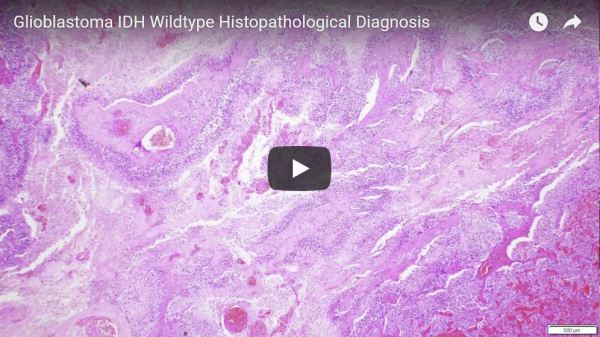
Video: Histopathological diagnosis of Peripheral Neuroblastic Tumors explained (i.e. Neuroblastoma, Ganglioneuroblastoma, and Ganglioneuroma), with an example review of Ganglioneuroma.

Histopathological diagnosis of Peripheral Neuroblastic Tumors explained (i.e. Neuroblastoma, Ganglioneuroblastoma, and Ganglioneuroma), with an example review of Ganglioneuroma. https://youtu.be/w9FEXK8tvJg

Multiple Sclerosis: Macrophages and Granular Mitosis in MS Plaques

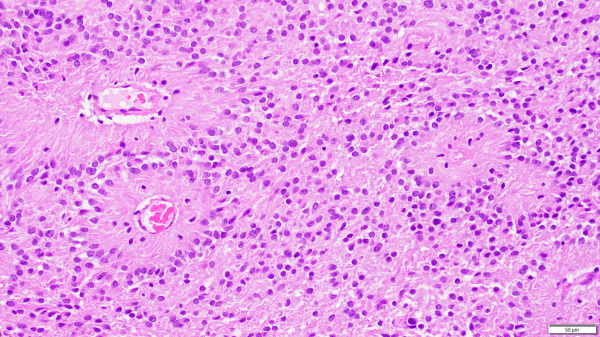
Demyelinating lesions, such as those found in multiple sclerosis, typically contain numerous macrophages with abundant myelin debris filling the cytoplasm.  Additionally, atypical and granular mitoses can be seen in demyelinating lesions, though they can also occur in gliomas. Follow us on Facebook, Instagram, and YouTube:  Adventures in Neuropathology

Craniopharyngioma on Gross Examination of Brain

This cystic and solid suprasellar mass, seen on this brain cut in the coronal plane, represents the classic gross appearance of a craniopharyngioma with typical focal yellow calcifications. The solid parts on gross examination correlate with enhancing regions on MRI while the cystic regions characteristically contain "machine oil"-like fluid, which is not appreciated in this... Continue Reading →

Psammoma bodies in a psammomatous variant of meningioma.

Psammoma bodies, lamellated purple concretions composed of calcium and other ions, are commonly found in meningiomas and are particularly numerous in the psammomatous variant of meningioma, pictured here.  Psammomatous meningiomas are low grade (WHO grade I) tumors that often have a gritty texture on gross evaluation due to increased numbers of psammoma bodies and dystrophic calcification often necessitating... Continue Reading →

Website Powered by WordPress.com.

Up ↑