Neurofibrillary tangles, like the one shown here, are composed of hyperphosphorylated tau proteins. Intracellular neurofibrillary tangles and extracellular amyloid plaques comprise the two characteristic neuropathologic findings of Alzheimer Disease, the most common neurodegenerative disease associated with progressive memory loss. This image was taken from an area of the brain that is often affected in Alzheimer Disease: the hippocampus, which is a... Continue Reading →
Epidermoid Cyst
Epidermoid cysts (pictured here with surrounding brain tissue) are histologically characterized by a thin layer of squamous epithelium similar to the epidermal lining the skin. However, unlike skin (which sheds its outer layer of dead cells into the environment), the keratin debris of the sloughed-off upper layer of the epidermoid cyst build up within the cyst center resulting in... Continue Reading →
Giant Cell Glioblastoma and Granular Mitoses
Giant Cell Glioblastoma, also called magnocellular or monstrocellular glioblastoma, is characterized by atypical cells that are extremely large, especially when compared to the non-neoplastic inflammatory cells seen on the left side of the image. The tumor has increased number of dividing cells, including typical mitotic figures (bottom left arrow) and atypical or granular mitoses (bottom... Continue Reading →
Tuberculosis with Caseating Granuloma
Tuberculosis, or TB, is characterized by the formation of granulomas that often have central necrosis, called caseous necrosis due to its cottage-cheese appearance on gross evaluation. Caseating granulomas characteristically have central necrosis surrounded by an immediate layer of macrophages and inflammatory cells, which, in turn, are surrounded by proliferating fibroblasts. This effort to contain the... Continue Reading →
Video: Histopathological diagnosis of Peripheral Neuroblastic Tumors explained (i.e. Neuroblastoma, Ganglioneuroblastoma, and Ganglioneuroma), with an example review of Ganglioneuroma.
Histopathological diagnosis of Peripheral Neuroblastic Tumors explained (i.e. Neuroblastoma, Ganglioneuroblastoma, and Ganglioneuroma), with an example review of Ganglioneuroma. https://youtu.be/w9FEXK8tvJg
Multiple Sclerosis: Macrophages and Granular Mitosis in MS Plaques
Demyelinating lesions, such as those found in multiple sclerosis, typically contain numerous macrophages with abundant myelin debris filling the cytoplasm. Additionally, atypical and granular mitoses can be seen in demyelinating lesions, though they can also occur in gliomas. Follow us on Facebook, Instagram, and YouTube: Adventures in Neuropathology
Video: Rhabdoid Meningioma explained.
https://youtu.be/YlKgPHM3YzY Follow us on Facebook, Instagram, and YouTube: Adventures in Neuropathology
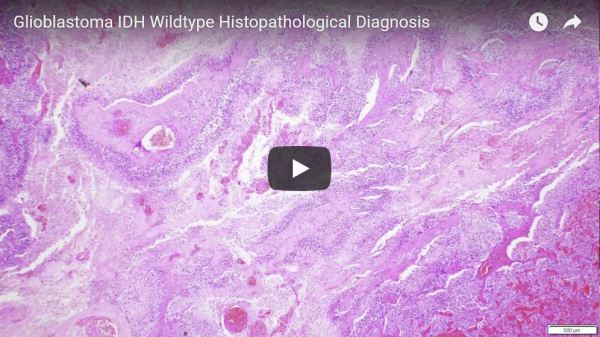
Video: Glioblastoma IDH Wildtype Histopathological Diagnosis
https://youtu.be/iQ1Be_0IpJM Follow us on Facebook, Instagram, and YouTube: Adventures in Neuropathology
Video: Hemorrhages and hematomas in the Central Nervous system – A narrative of microscopic features.
Hemorrhages and hematomas in the Central Nervous system - A narrative of microscopic features. https://www.youtube.com/watch?v=MCx1DFjANzU&feature=youtu.be Follow us on Facebook, Instagram, and YouTube: Adventures in Neuropathology
Craniopharyngioma on Gross Examination of Brain
This cystic and solid suprasellar mass, seen on this brain cut in the coronal plane, represents the classic gross appearance of a craniopharyngioma with typical focal yellow calcifications. The solid parts on gross examination correlate with enhancing regions on MRI while the cystic regions characteristically contain "machine oil"-like fluid, which is not appreciated in this... Continue Reading →